
IVF Treatment Step by Step: From Initial Tests to Embryo Transfer
✍️ By Dr. Prathima Kamisetty •  october 16, 2026 •
 7 min read
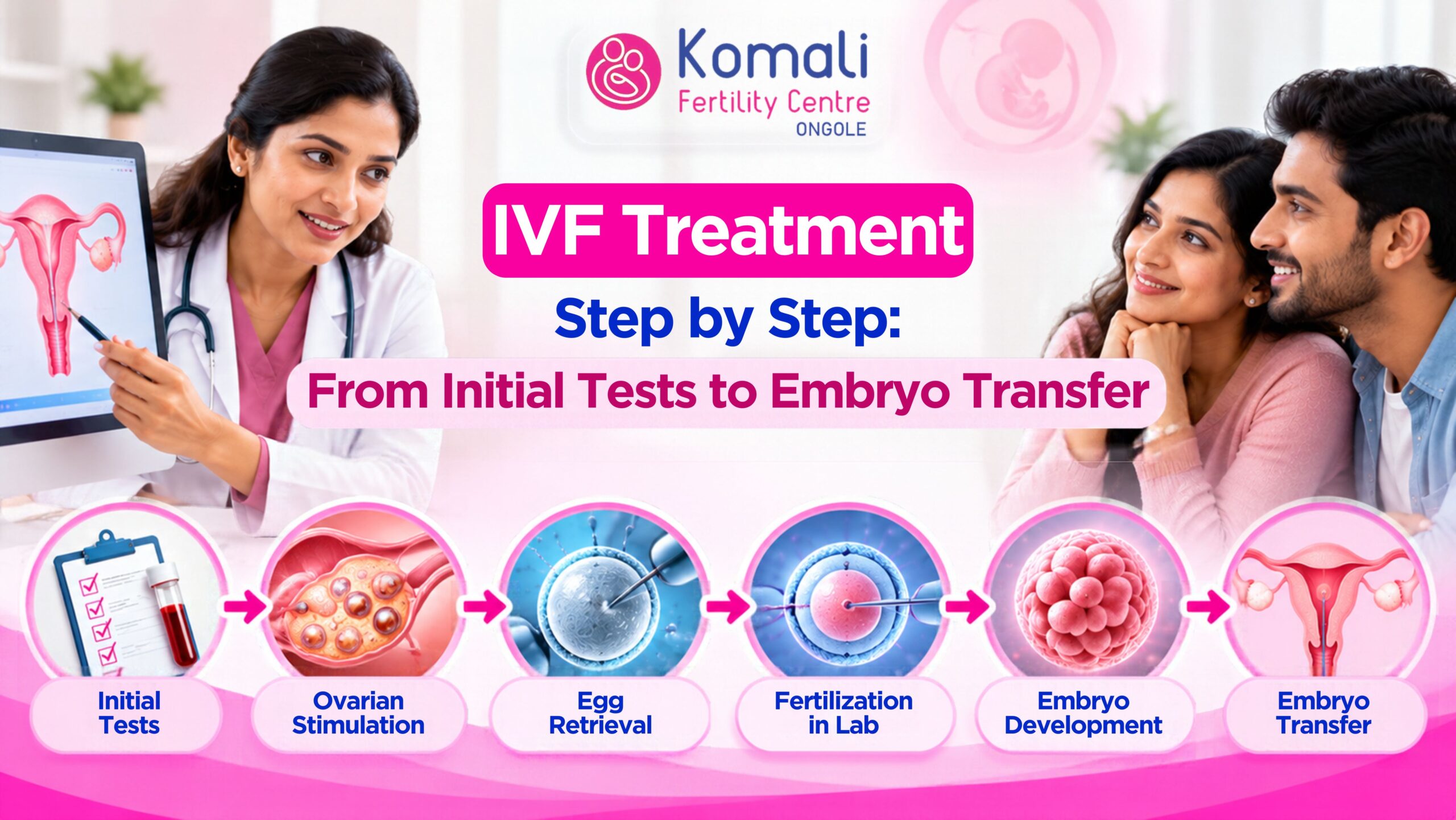
Understanding the IVF treatment step-by-step process can help individuals and couples feel more prepared when exploring fertility treatment. In Vitro Fertilization (IVF) is an assisted reproductive technology in which eggs are collected from the ovaries and fertilized with sperm in a laboratory. An embryo may then be transferred into the uterus.
IVF may be recommended for different fertility concerns, including blocked fallopian tubes, ovulation disorders, certain sperm-related problems, or unexplained infertility. The treatment plan depends on individual medical history, fertility test results, and the specialist’s assessment.
At Komali Fertility Centre, Ongole, patients can discuss their fertility concerns and learn about appropriate evaluation and treatment options. Here is a step-by-step overview of the IVF journey.
1. Initial Fertility Consultation and Tests
The first step in IVF treatment is a consultation with a fertility specialist. The doctor reviews medical history, menstrual cycles, previous pregnancies, medications, and any earlier fertility treatments. Both partners may need evaluation because fertility factors can involve either partner.
Depending on individual circumstances, initial investigations may include:
- Hormone Tests: Blood tests may assess hormone levels and ovarian function.
- Ultrasound Scan: A pelvic ultrasound helps examine the uterus and ovaries and may assess the antral follicle count.
- Semen Analysis: This evaluates sperm count, movement, and shape.
- Additional Investigations: Other tests may be advised based on medical history, symptoms, or previous results.
These assessments help the specialist determine whether IVF is suitable and develop an individualized treatment plan.
2. Ovarian Stimulation and Egg Retrieval
Once the treatment plan is finalized, the next stage usually involves ovarian stimulation. Fertility medications encourage the ovaries to develop multiple follicles, which may contain eggs.
During this phase, the specialist monitors the response using ultrasound scans and, when appropriate, blood tests. Medication doses and treatment timing are adjusted according to the patient’s response.
When the follicles are considered ready, a trigger medication is administered to help the eggs mature. Egg retrieval is then scheduled at the recommended time. The eggs are collected from the ovaries using a needle guided by ultrasound, generally under sedation or anesthesia.
The procedure is commonly completed within a short period, and patients receive instructions about recovery and follow-up care. The number of eggs collected varies from person to person, and not every collected egg will necessarily be suitable for fertilization.
3. Fertilization, Embryo Development, and Embryo Transfer
After egg retrieval, the collected eggs are assessed in the laboratory. Fertilization may be performed using conventional IVF or, when clinically indicated, Intracytoplasmic Sperm Injection (ICSI), in which a single sperm is injected into an egg.
The laboratory team monitors fertilized eggs as they develop into embryos. Not every egg fertilizes, and not every fertilized egg develops into an embryo suitable for transfer. The number and quality of embryos depend on several factors, including age, egg and sperm quality, and individual treatment circumstances.
The specialist and embryology team decide when embryo transfer is appropriate. A suitable embryo is placed into the uterus using a thin catheter. The procedure is generally brief and does not usually require anesthesia.
Depending on medical considerations, the clinic may recommend a fresh embryo transfer or freezing suitable embryos for transfer in a later cycle. The choice depends on the patient’s response, embryo development, uterine conditions, and overall treatment plan.
4. After Embryo Transfer: Pregnancy Testing and Follow-Up
After embryo transfer, the specialist provides instructions about medications, daily activities, and follow-up appointments. Prescribed medicines, including progesterone when recommended, should be taken exactly as directed. Do not stop medication without consulting the treating doctor.
A pregnancy blood test is usually scheduled around 9–14 days after embryo transfer, depending on the clinic’s protocol and the type of transfer. Testing too early may produce misleading results, so following the recommended date is important.
A positive pregnancy test is encouraging, but follow-up is still necessary to assess the pregnancy. If the result is negative, the fertility specialist can review the cycle and discuss possible next steps.
IVF outcomes vary. Age, the underlying cause of infertility, embryo development, medical history, and previous treatment outcomes may influence the chances of success. No treatment can guarantee pregnancy, and the specialist can explain the factors relevant to each individual.
Conclusion
Understanding the IVF treatment process can help you prepare for each stage, from fertility tests to embryo transfer. At Komali Fertility Centre, Ongole, our team can guide you through suitable fertility treatment options.
Contact Us Today to schedule a consultation and take the next step in your fertility journey.
FAQs:
- What are the first tests required before starting IVF treatment?
Answer: Initial fertility tests assess reproductive health and guide treatment planning. IVF Treatment Step by Step: From Initial Tests to Embryo Transfer explains each stage clearly.
- How long does the complete IVF treatment process usually take?
Answer: IVF timing varies by individual treatment plan. IVF Treatment Step by Step: From Initial Tests to Embryo Transfer helps patients understand the process and timeline.
- What happens during egg retrieval in an IVF cycle?
Answer: Eggs are collected from the ovaries using ultrasound guidance. IVF Treatment Step by Step: From Initial Tests to Embryo Transfer explains egg retrieval and laboratory procedures.
- Is embryo transfer painful, and what happens afterward?
Answer: Embryo transfer is usually brief and causes minimal discomfort. IVF Treatment Step by Step: From Initial Tests to Embryo Transfer explains follow-up care and pregnancy testing.
- How many days after embryo transfer is pregnancy tested?
Answer: Pregnancy testing is often scheduled 9–14 days after transfer. IVF Treatment Step by Step: From Initial Tests to Embryo Transfer explains the recommended testing timeline.
Ready to begin your journey to parenthood?
Schedule a personalized consultation with Dr. Prathima Kamisetty at Komali Fertility Centre Ongole.